Yes. The planned duration and frequency of use are important factors in selecting suitable structure. Short-duration or single-day events can often be served efficiently by lighter continuous-air (sewn) tents that prioritise quick setup and lower weight. Multi-day installations or repeatedly deployed outdoor projects generally benefit from airtight welded PVC beams that reduce dependence on continuous power and improve long-term durability.
Power availability on site, transport logistics and overall cost of ownership remain secondary but relevant considerations. When these elements are reviewed together, the final choice of structure aligns more closely with the real operating pattern of the project.

Because sewn seams contain needle holes, effective rain protection requires additional sealing measures and thoughtful structural design. At the roof panel joints, we apply heat-welded PVC cover strips over the stitched areas to protect the needle holes. The roof is also designed with a slope to encourage fast water runoff and help prevent water pooling.
The actual level of rain protection depends on the expected weather conditions and intended use. For projects exposed to heavy or prolonged rainfall, long-term outdoor deployment, or requiring a fully enclosed waterproof space, we assess the PVC material grade, seam treatment, and wall configuration to recommend a suitable solution.
Before ordering, please share your expected rainfall conditions and intended usage duration so we can confirm the appropriate materials and construction for your project.

Waterproofing in airtight tents relies on welded PVC structural components, carefully designed panel connections, and effective water drainage. High-frequency welding joins PVC components without relying on conventional stitched seams, helping reduce the risk of water ingress through needle holes in the structural tubes.
In Joy Inflatable’s airtight models, the structural beams use welded construction to retain air. Roof and cover panels may use sealed or overlapping joints, while the overall design helps direct rainwater away from vulnerable areas and reduces the risk of water pooling. Doorways, wall connections, and accessory junctions also need to be considered according to the level of weather protection required for the project.
Actual waterproofing performance depends on the specific tent design, materials, and construction details. Please share your intended application and expected outdoor conditions so we can confirm the available configuration for your project.

Yes. Inflatable tents can perform reliably outdoors when the structure, material grade and anchoring system are correctly matched to the specific site’s wind, rain and temperature conditions. Outdoor use always requires proper ground fixing, regular inspection and strict adherence to safe operating limits under local weather.
Our tents are designed for outdoor deployment once these factors have been properly specified. Joy Inflatable assists clients in selecting the appropriate design, material and anchoring method so that the finished installation remains stable and weather-resistant under the expected conditions. When the site assessment and specification are handled carefully, outdoor performance is both practical and dependable.

At Joy Inflatable, we select materials according to the intended application and product requirements. For selected products, we use high-grade PVC mesh cloth made with environmentally conscious 3P raw materials, which our product specifications describe as non-toxic and odorless. These materials are also specified as offering UV resistance, anti-aging properties, and flame retardancy.
Material properties vary by product, so we do not assume that every material option meets the same chemical safety or environmental standards. If your project requires specific chemical compliance, environmental certifications, or documentation for a particular venue or destination market, please let us know before requesting a quotation.
Our team can review the requirements and confirm the relevant material specifications and supporting documents available for your selected product before the order is finalized.

PVC-coated fabrics commonly used in commercial inflatables retain flexibility and strength across a broad temperature band, typically from roughly –25°C to +70°C under normal conditions. Below the lower limit the material stiffens; prolonged exposure above the upper limit can accelerate coating degradation.
Our PVC-based tents are designed for this general operating range. Actual performance still depends on exact material grade, duration of exposure, installation method and local micro-climate. Projects facing extreme cold or heat are reviewed in advance so the most suitable material specification can be confirmed.

Yes, selected Joy Inflatable tent materials are described as flame-retardant, UV-resistant, waterproof, and weather-resistant. For example, some PVC tarpaulin products are specified as waterproof, fireproof, and UV-protected, while certain PVC mesh materials are described as offering UV resistance, anti-aging properties, and weather resistance. These features can help make the specified materials suitable for outdoor applications.
However, material properties and specifications vary by product. The applicable fire rating, test results, and compliance documentation should be checked against the selected material and the requirements of your destination market. The exact rating and supporting compliance documents are confirmed for the chosen material and the destination market before the order is finalised, ensuring the tent meets both project requirements and applicable local regulations.
Our team can review your application and confirm which material options and supporting documents are available for your chosen tent.


Sewn inflatable structures inherently contain needle holes along every seam. Professional waterproofing therefore relies on secondary sealing: heat-welded PVC roof membranes, application of waterproof seam tape or liquid sealant over stitching lines, overlapping wall panels, and rain-shedding roof geometry that directs water away from joins.
On our sewn tents we combine these measures according to the expected weather exposure. PVC roof panels are either fully heat-welded or protected with specialised seam treatments, while fabric walls incorporate overlaps and weather-resistant fasteners. When a project faces heavy or prolonged rain we upgrade material grade and detailing so the tent remains serviceable under the stated conditions.
Joy Inflatable recommends matching construction method to site constraints and operating pattern. When continuous electricity is readily available and lowest initial cost is important, a sewn continuous-air tent is usually the efficient choice. When blower noise must be avoided, power supply is limited, or the tent will stand for extended periods, an airtight welded structure offers clear operational advantages.
We guide clients by reviewing power availability, expected daily operating hours, noise restrictions, transport weight and budget. Once these parameters are clear we recommend the method that delivers the best balance of convenience, reliability and total cost of ownership for the specific project.
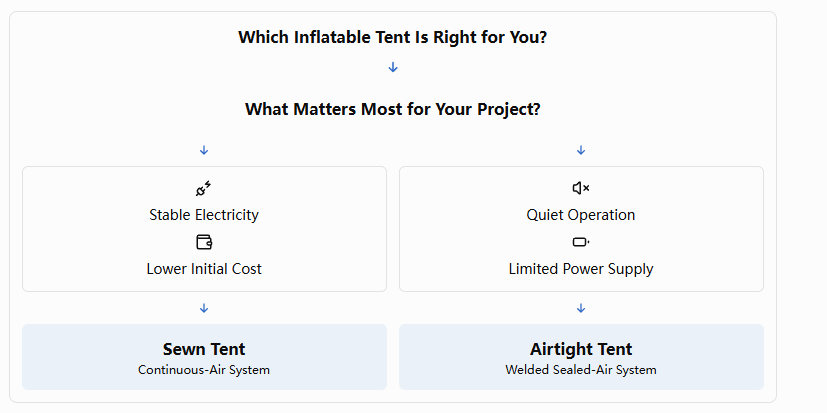
From a technical standpoint, sewn tents are non-airtight by nature; air continuously escapes through needle holes and fabric porosity, so a blower must run the entire time the tent is in use. Welded airtight tents eliminate needle holes by fusing material panels under heat and pressure, creating a sealed chamber that retains air after the pump is removed.
In our production, sewn tents remain lighter and more economical, while welded airtight tents are heavier, cost more, yet operate silently and without continuous power once inflated. The practical difference therefore lies in power dependence, noise level, weight and long-term operating cost—factors that determine which system better suits a given project.
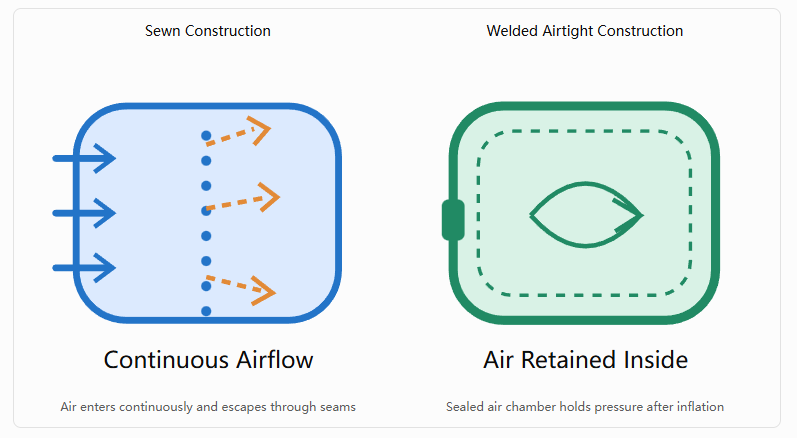
In the inflatable tent industry, two fundamental construction approaches dominate: continuous-air (sewn) systems and sealed-air (welded airtight) systems. Continuous-air tents rely on machine-stitched seams and a constantly running blower to maintain internal pressure, while airtight tents use heat-welded or high-frequency welded seams that allow the structure to hold air after inflation.
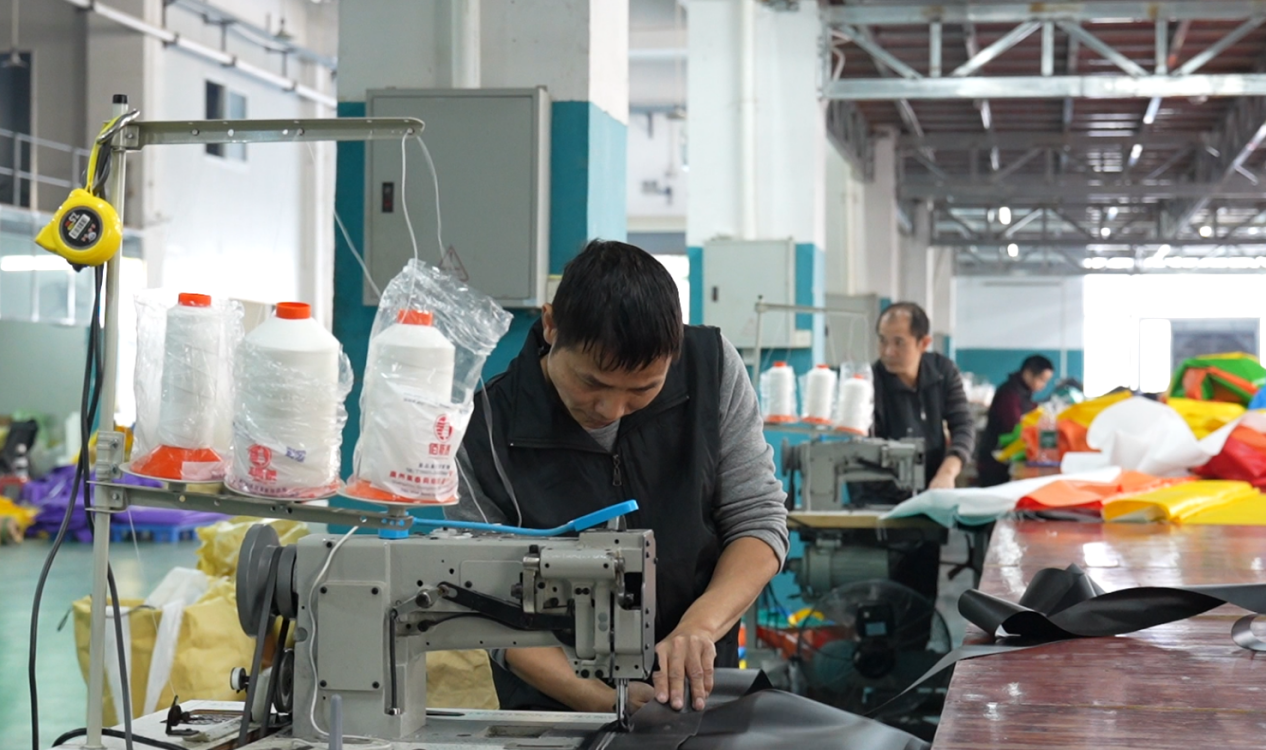
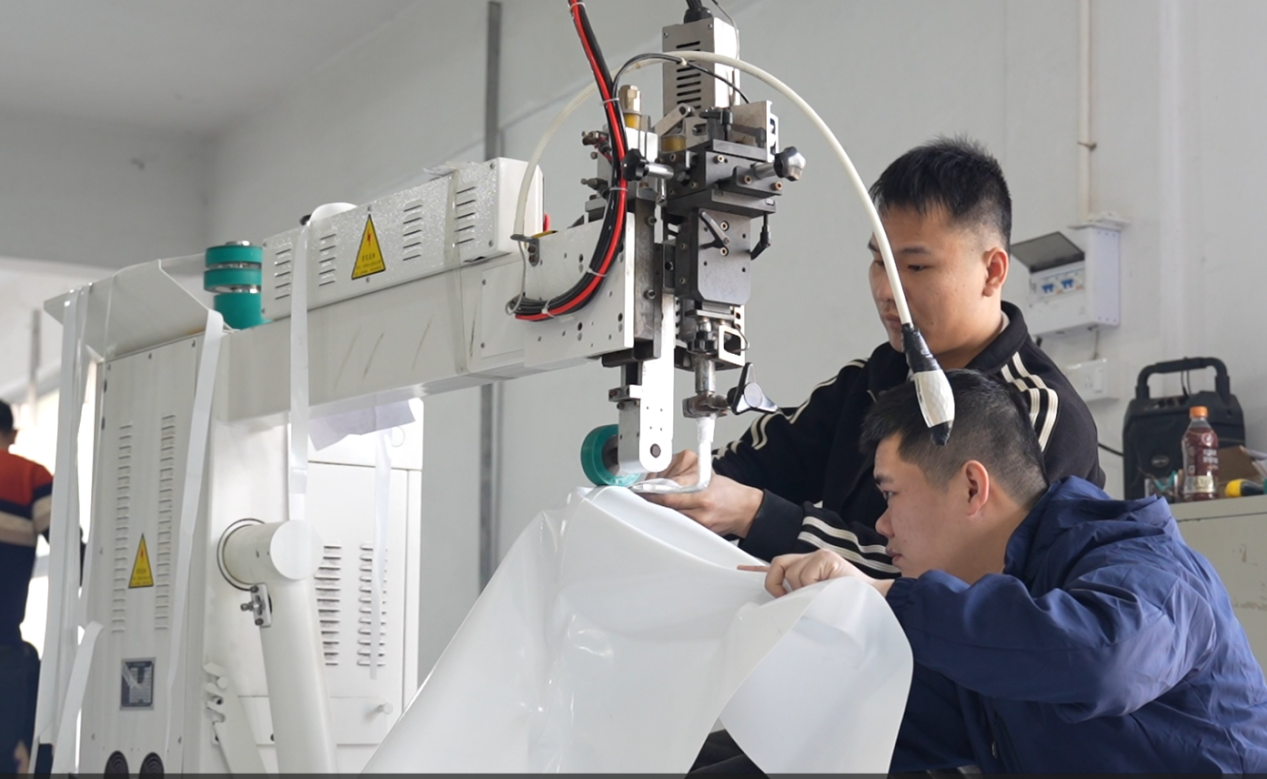
At Joy Inflatable we offer both methods. Our sewn, blower-supported construction employs precision stitching with reinforcement at high-stress zones. Our high-frequency welded airtight construction creates continuous sealed PVC beams. Some designs combine airtight PVC tubes with Oxford or PVC covers to balance strength and weight. Both processes are carried out under controlled factory conditions with seam-strength and finish inspections, ensuring the finished tent meets professional commercial standards.
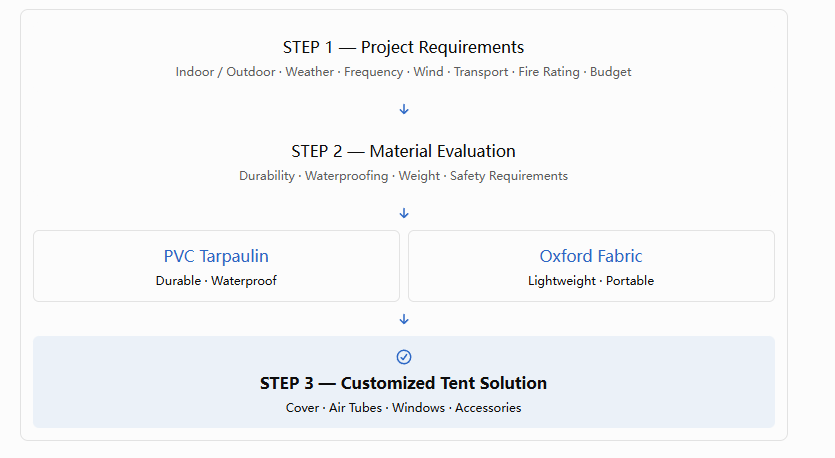
We consider indoor or outdoor use, rain and sun exposure, setup frequency, wind conditions, transport method, required fire rating, and budget to determine the material requirements for each custom project.
For example, the expected weather exposure helps establish the level of weather protection needed, while setup frequency and transportation arrangements help determine practical requirements for handling and repeated use. Wind conditions and site requirements should also be considered when assessing the overall project specifications.Fire-rating requirements depend on the applicable standards for the intended location or event. If your project requires specific fire-resistance documentation, please provide the relevant standard so we can check whether suitable materials and supporting documents are available.
These details help us assess the appropriate combination of cover, inflatable tubes, windows, and accessories. Please share your project conditions and budget range so we can compare available options and confirm a suitable configuration.